

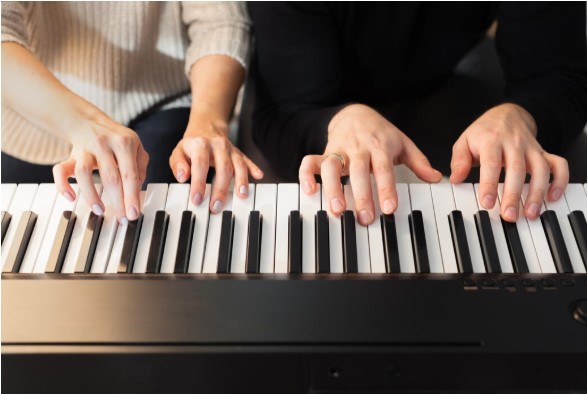
Learning the piano is a great first step towards a life of music. Many people think that they don’t have the right experience, but experience is not the most important part of being successful at learning. The more you know about what to expect in your first lesson, the more confident and prepared you’ll be.
Learning the piano can be fun and rewarding with the proper attitude, reasonable objectives, and regular practice.
Set Realistic Expectations
All pianists are beginners at one time. After a couple of lessons, don’t expect to be playing complex pieces. The process of learning piano is a gradual one that takes time to develop and improve with practice and instruction.
Reward minor successes, like learning a few notes or hand coordination. Better to make steady progress than to be perfect.
Choose the Right Learning Environment
How you teach your kids affects their learning. Look for teachers who set up a positive learning environment and customize lessons to your objectives and background. A systematic process aids the novice in gaining confidence and learning correct technique.
Piano lessons should be about learning music, rather than just learning songs. Learning should be challenging and yet enjoyable.
Practice Consistently Between Lessons
Practice makes perfect. As little as 20-30 minutes daily can be more effective than a single long practice session each week. Brief, targeted practice helps to ensure that new skills become ingrained in the muscle memory.
By being consistent, you will be able to build momentum lesson after lesson. For the beginner, one of the best habits is to establish a routine.
Learn the Basics First
Good foundations allow for the easy progression of higher levels of playing. Your teacher will probably start with some basic finger work, note reading, rhythm, hand position, and posture. These are basic skills that support and build musical skills going forward.
With piano lessons, you will learn technique right from the start to avoid bad habits. Spending time learning fundamentals results in higher success in the future.
Don’t Be Afraid to Make Mistakes
All errors are learning opportunities. It is perfectly normal for beginners to play the wrong notes or have rhythm problems. Don’t feel frustrated; learn from errors.
A patient attitude is essential to gain confidence, enjoy the trip, and get through it. Practice makes perfect.
Stay Motivated With Personal Goals
Having clear goals makes learning more rewarding. Whether you like to listen to your favorite songs, perform for family and friends, or listen to music as a hobby, you might want to consider the above. If you share these goals with your instructor, lessons can be tailored to your interests.
Setting personal goals helps keep things going when it gets tough. Making learning more meaningful is linked to your own visions.
Piano lessons for beginners are the beginning of a wonderful musical adventure. All successful pianists have had a first lesson, and with a little patience and commitment, you can train yourself to enjoy and be confident for years to come.